
Miniature Schnauzer Dogs – Big Beard, Big Personality, Small Dog

If you’ve ever met a Miniature Schnauzer, you’ll know they’re a delightful mix of sharp wits, boundless affection, and a cheeky streak. I’m lucky enough to have a Mini Schnauzer called Betty in my life. In this guide, we’re looking at everything you need to know about these bearded charmers, from their origins and personality quirks to their health, diet, and training. Whether you’re thinking about adding one to your family, already live with one of these salt and pepper scamps, or you’re just here for the love of dogs (and maybe some original dog art or gifts to brighten up your home), this is your brief one-stop guide to the mighty Miniature Schnauzer.
Mini Schnauzer At A Glance
- Temperament: Intelligent, Spirited, Loyal
- Country of Origin: Germany
- Group: Terrier Group (although technically not a true terrier)
- Height: 30–36 cm (12–14 in)
- Weight: 5–9 kg (11–20 lb)
- Activity level: High
- Good with other dogs: Usually, with proper introductions
- Good with kids: Yes, especially when socialised early
History and Origins of the Miniature Schnauzer
The Miniature Schnauzer may look like a pint-sized version of the Standard Schnauzer, but they have their own unique history. Developed in Germany during the late 19th century, they were bred to be small farm helpers, chasing rats, guarding property, and generally keeping things in order (or at least in the Schnauzer version of order). The breed likely originated from crossing the Standard Schnauzer with smaller breeds, such as the Affenpinscher and Miniature Poodle, to achieve a compact, sturdy frame and fearless heart.
By the early 20th century, their bearded faces had charmed dog lovers across Europe, and after WWII, their popularity soared in the United States and beyond. Today, they’re beloved not just for their working roots but for their personality – clever, loyal, and more than capable of outsmarting their humans if given half a chance.
And for Mini Schnauzer fans looking for dog lover gifts that capture that unique expression, well, there’s a thriving dog art shop dedicated to just that.
Physical Characteristics of the Miniature Schnauzer
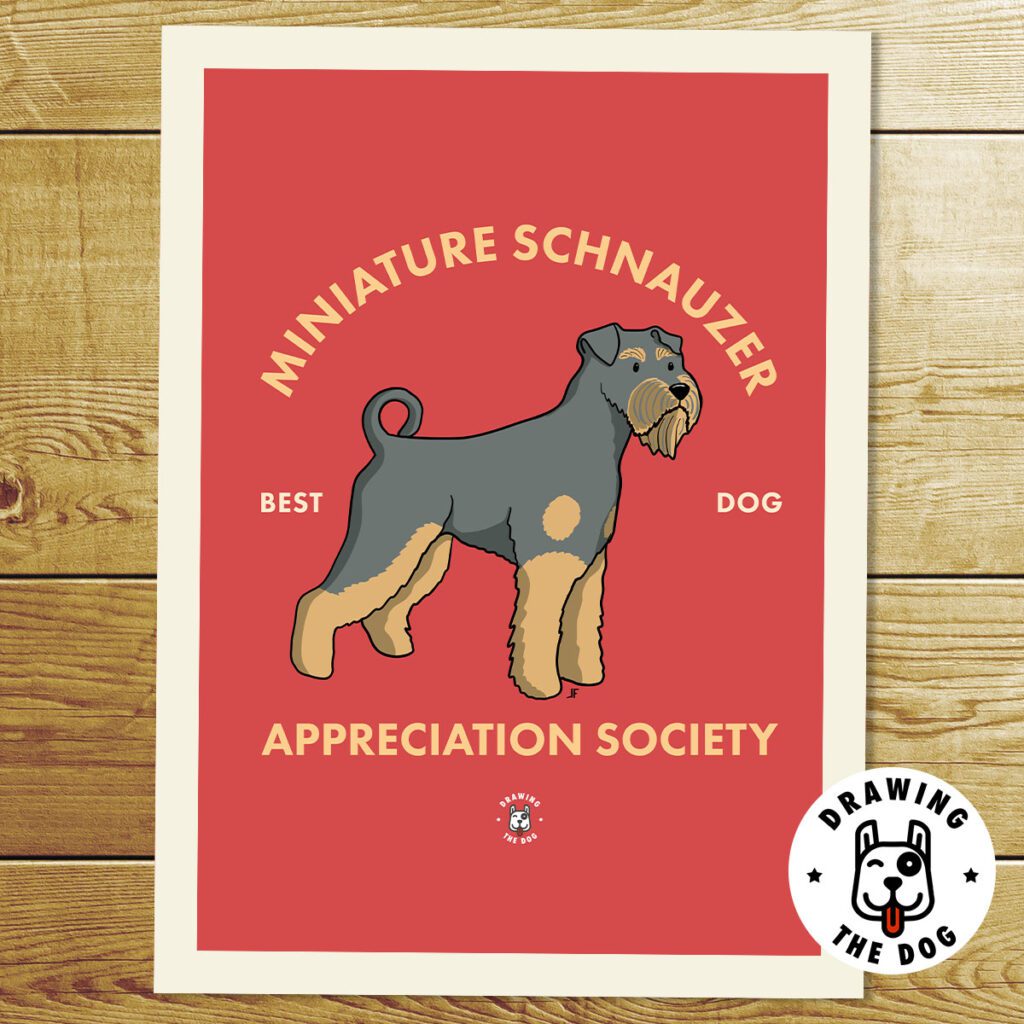
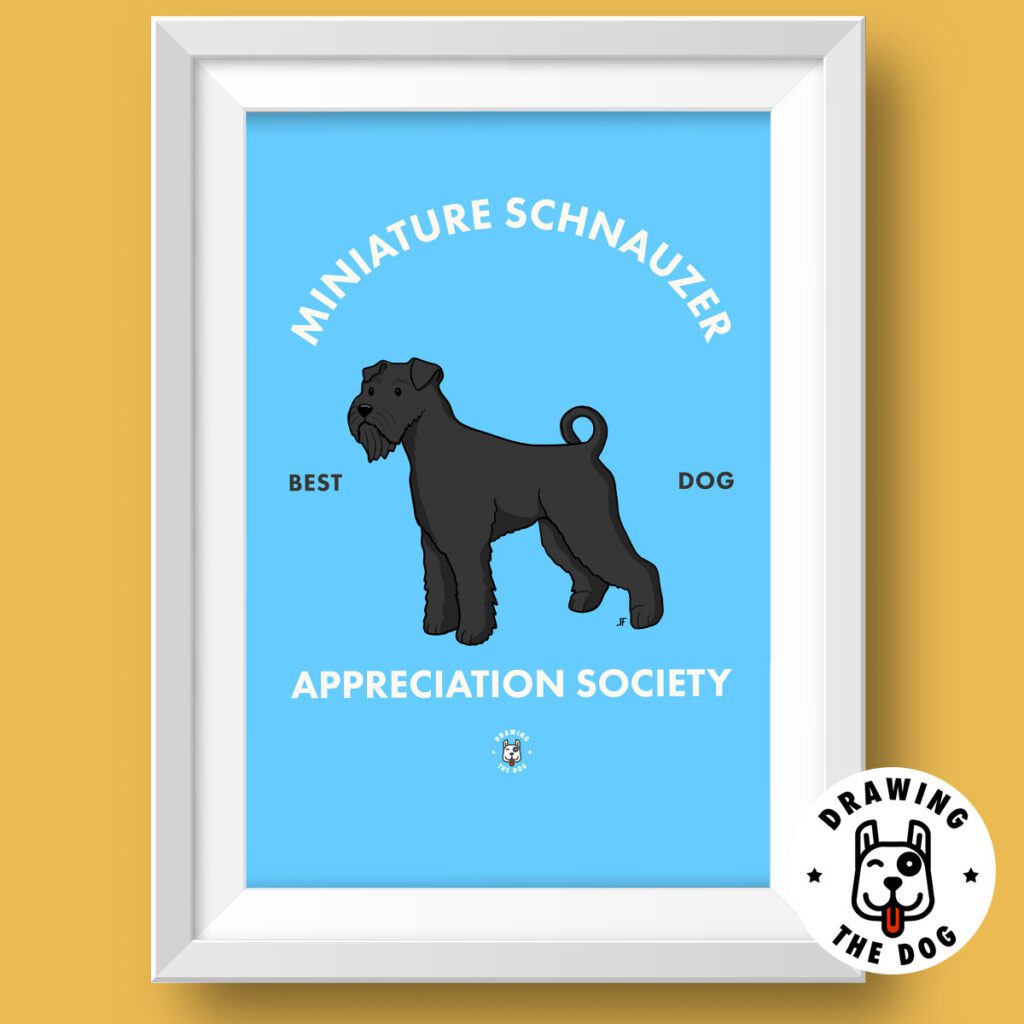
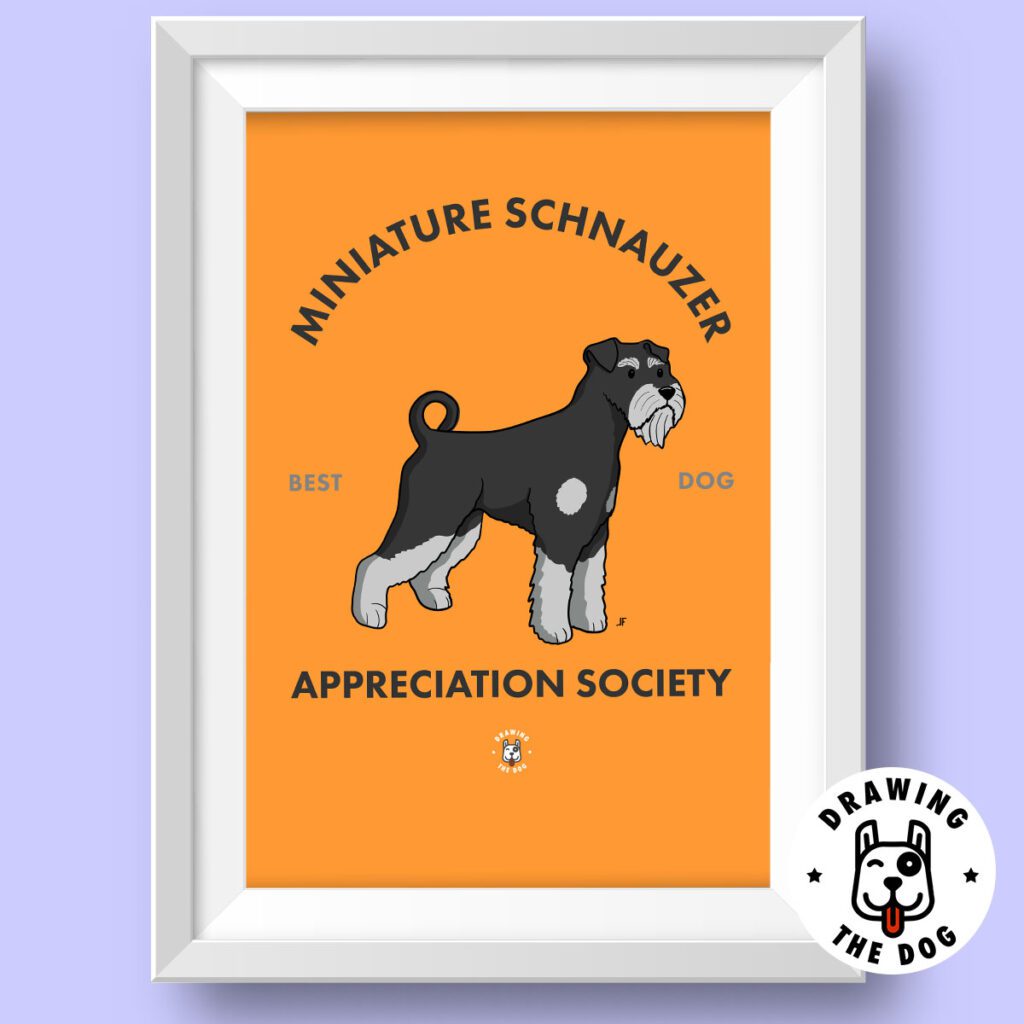
The Miniature Schnauzer has an expressive face – and often that expression looks a little grumpy – but these are sweet, loyal doggos. That trademark beard and bushy eyebrows aren’t just for show, they were originally practical, helping to protect their face when dealing with vermin. The coat comes in salt-and-pepper, black, or black-and-silver, with a double layer that’s wiry on top and beautifully soft underneath. There are a few other colours, but they are rare.
They’re solid little dogs, square in build, and surprisingly athletic. Those long, expressive eyebrows can give them a look somewhere between wise old professor and mischievous scamp, and you’ll see both expressions in the space of minutes.
If you want artwork that captures that look perfectly, you’ll find no shortage of art gifts for Miniature Schnauzer lovers inspired by this iconic breed in our shop.
Temperament and Behaviour Traits
Here’s the thing about Miniature Schnauzers: they believe they’re the smartest person in the room, and sometimes, they’re not wrong. They’re alert, energetic, and fiercely loyal to their people. They have a bit of a watchdog streak; they’ll sound the alarm when someone approaches, but unlike some yappy breeds, they tend to quiet down once they’ve sized up the situation.
They thrive on being part of family life, and they’ll shadow you from room to room. Left alone too long, they can get bored, and a bored Mini Schnauzer will find “creative” outlets for their energy, think rearranging the bin contents across the kitchen floor.
Health Considerations for Miniature Schnauzers
Generally healthy and hardy, Miniature Schnauzers can live well into their mid-teens. However, they can be prone to certain issues such as pancreatitis, hyperlipidaemia, cataracts, and urinary stones. Regular vet check-ups, a balanced diet, and keeping their weight in check will go a long way to avoiding these problems. Their beards also need regular cleaning, especially after meals, as leftover food caught in a beard is no one’s idea of pleasant.
Miniature Schnauzer Nutrition and Diet Needs
Because they can be prone to pancreatitis and weight gain, a Miniature Schnauzer’s diet should be carefully balanced. Look for high-quality dog food with lean protein sources and low fat. Avoid too many rich treats and stick with healthy snacks like carrot sticks or small pieces of apple (minus the seeds). Fresh water should always be available, and portion control is important no matter how much they insist they’re “starving” an hour after breakfast.
Training Tips for New Owners
Miniature Schnauzers are whip-smart, which means training is fun and occasionally a challenge. They pick things up quickly, but they’re also quick to notice if there’s nothing in it for them. Keep training sessions short, fun, and reward-based. They respond well to praise and a small treat (though mind the fat content to avoid tummy trouble). Socialisation from a young age is key, as it helps temper their natural suspicion of strangers and keeps them from becoming overprotective.
Exercise Requirements for Active Miniature Schnauzers
Don’t let their size fool you, these dogs have energy to burn. Daily walks (two is better than one), combined with playtime and mental stimulation, will keep them happy. They excel in dog sports like agility and obedience, and they love puzzle toys. If they don’t get enough exercise, they’ll make their own entertainment, and that might involve redecorating your sofa cushions. I speak from experience here.
Popular Myths About Miniature Schnauzer Dogs
- “They’re hyper all the time.” While they’re energetic, a well-exercised Mini Schnauzer will happily curl up for a nap beside you.
- “They’re aggressive because they bark a lot.” They’re vocal watchdogs, not aggressive by nature; proper training helps manage barking.
- “They don’t shed at all.” They shed very little, but regular grooming is essential to prevent their soft undercoat matting and keep them looking dapper.
Embracing Life with a Miniature Schnauzer
Sharing your life with a Miniature Schnauzer means embracing their big personality and boundless love. They’ll keep you laughing, get you out walking more often, and probably improve your reflexes when they decide to chase after a leaf mid-walk. They’re adaptable, fitting into both city apartments and country homes, as long as they’re part of the action.

Check out all of our unique hand-drawnh mini schnauzer dog lover gifts that capture those trademark whiskers and eyebrows .
Miniature Schnauzer FAQ
Q: Are Miniature Schnauzers noisy?
A: They do like the sound of their own voice, especially when alerting you to visitors, but good training can keep barking under control.
Q: Are they good first dogs?
A: Yes, as long as you’re ready for their energy and intelligence, they need mental stimulation and companionship.
Q: Do they get along with cats?
A: Many do, especially if raised with them, but some will always see a cat as a potential chase target.
Q: How often do they need grooming?
A: A full groom every 6–8 weeks, plus regular brushing, will keep them tidy.
Conclusion
The Miniature Schnauzer is a breed that packs charm, intelligence, and loyalty into a wonderfully whiskered package. They’re not just pets, they’re family, entertainers, and steadfast companions.
If you love the look of these delightful dogs, why not bring a bit of that Miniature Schnauzer charm into your home with dog art or gifts? Visit Drawing The Dog – your dog shop for original art and dog gifts for dog lovers.
References
- American Kennel Club – Miniature Schnauzer
- UK Kennel Club – Miniature Schnauzer
- PetMD – Miniature Schnauzer Breed Profile
Alternatives to the Miniature Schnauzer
- West Highland White Terrier – Similar in size and energy, with a cheerful nature and a bit of that terrier mischief. (I’ve also had a Westie and I LOVE these dogs)
- Scottish Terrier – More reserved than the Mini Schnauzer, but equally loyal and brimming with character.
- Cairn Terrier – Spirited, hardy, and full of curiosity, with a big personality in a small frame.
- Border Terrier – Friendly, low-maintenance coat, and a great family dog with a working background.