
The first time I met ANY dog was when I was a toddler. Our next-door neighbours had a dog called Goldie, a golden yellow Labrador who somehow managed to be everyone’s best friend. Our family didn’t get a dog for another few years, so I liked to pretend Goldie was mine. That early love affair with a Lab stayed with me, and it’s why I pour so much affection into creating art that celebrates dogs.
If you’re looking for the perfect gift for a Labrador lover (or treating yourself – why not?), you’ve come to the right place. All of the prints are hand-drawn by me, no AI, no clip art.
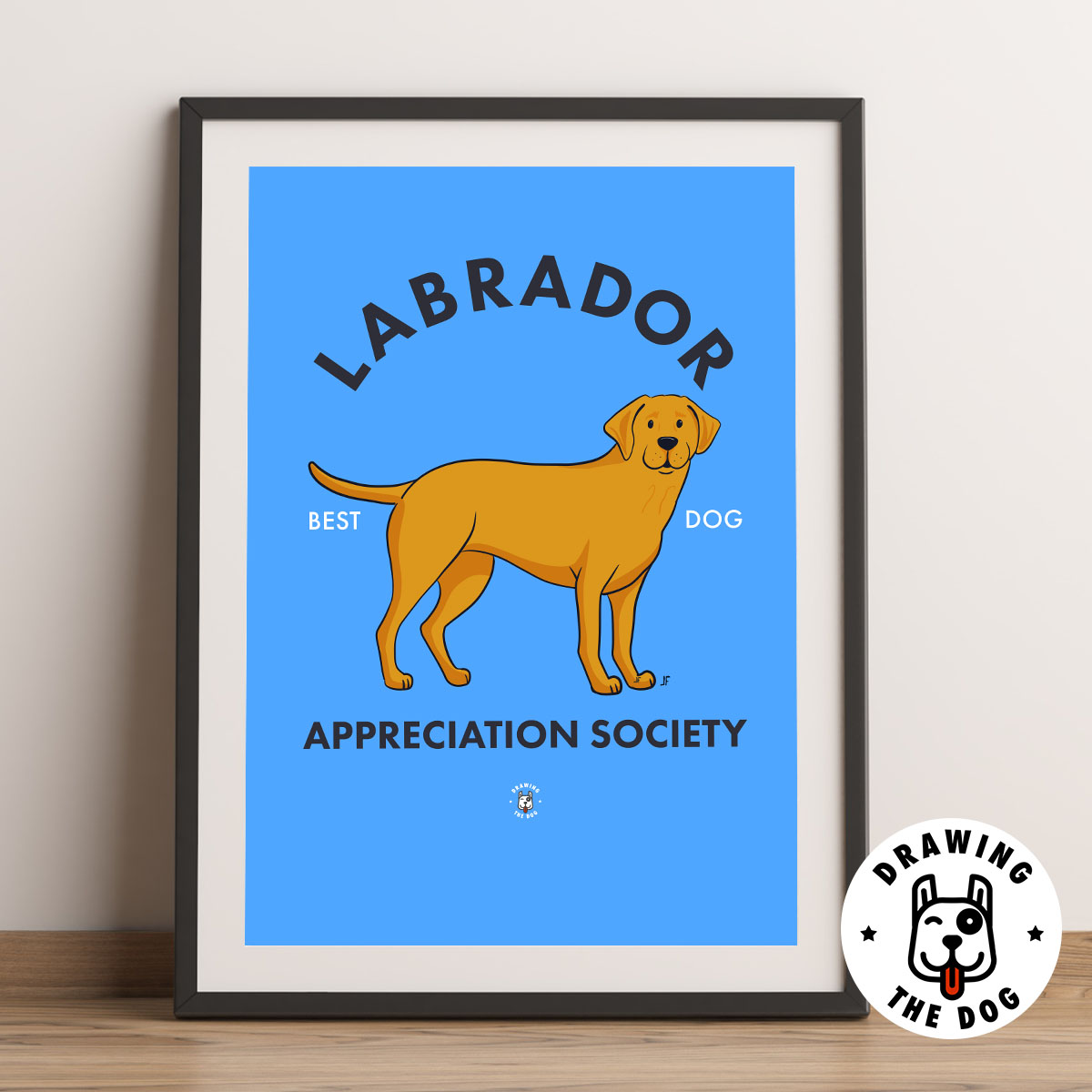
The Labrador Appreciation Society Print
Shop the Labrador Appreciation Society Print
This is for the proud Lab parent who fully understands that their dog is, in fact, superior to all other dogs. (We won’t tell the other breeds.)
The vintage-inspired design features a distinguished Labrador portrait surrounded by the official credentials: “Labrador Appreciation Society – Best Dog.” Because let’s face it, the moment you met your first Lab, you became a member for life.
Perfect for:
- New Lab puppy parents celebrating their initiation into the club
- Anyone whose entire camera roll is 97% Lab photos
- The friend whose Lab is definitely their favourite child
- Housewarming gifts for Lab owners settling into their new home (which their dog will immediately claim as their own)
The design works beautifully in any room – kitchen, living room, home office, or even a dedicated “dog room” (yes, that’s a thing, and yes, Labs deserve one).
Captain Lab – Special Reserve – Salty Sea Dog Print
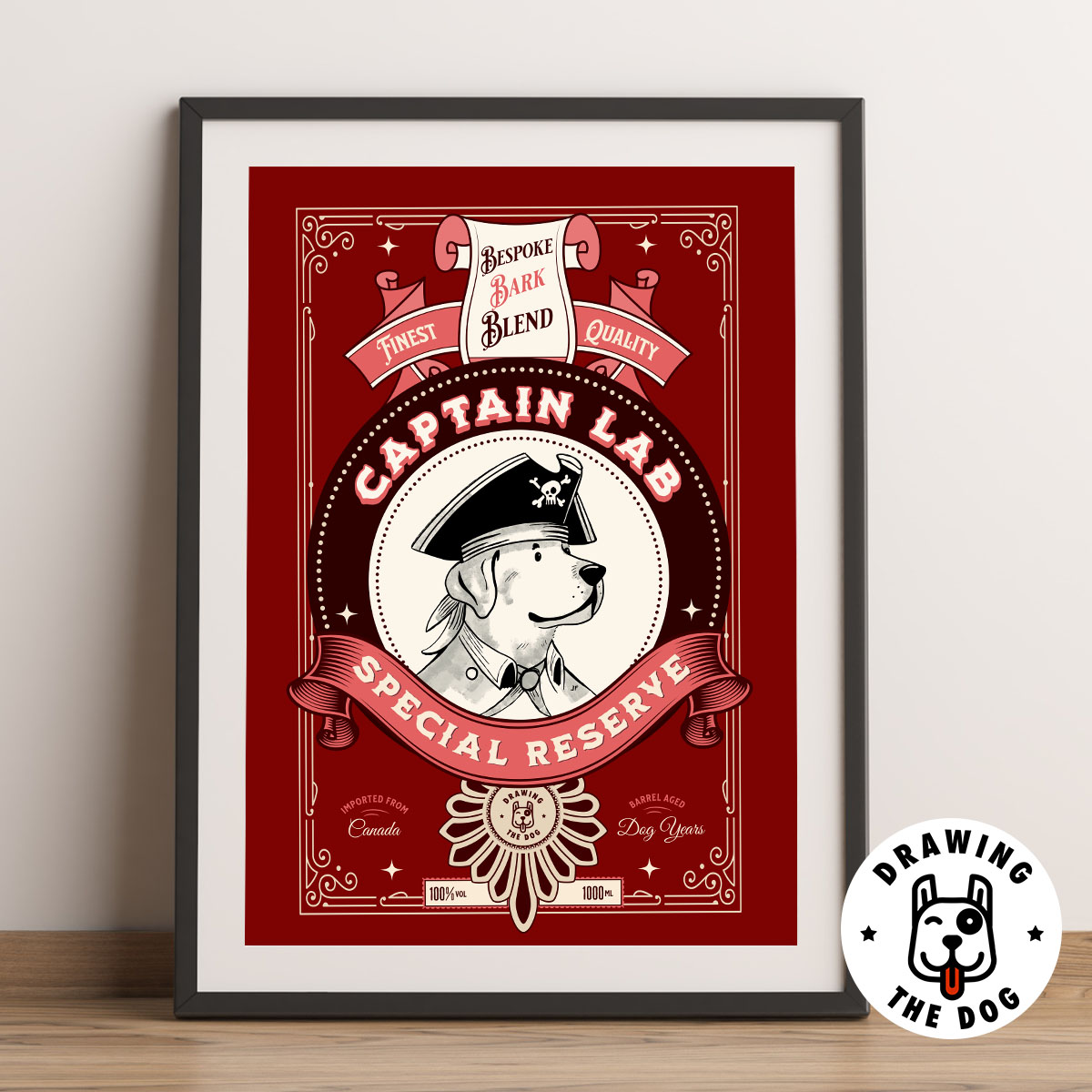
Here’s a fun fact that makes this print extra meaningful: Labradors were originally bred in Newfoundland as fishing companions. They retrieved nets, caught escaped fish, and earned their keep on the water. Their water-resistant coats and webbed feet made them natural-born sailors.
The Captain Lab print celebrates this heritage with a nautical vintage label design that looks like it came straight from an old seafaring adventure. It’s dignified, charming, and slightly cheeky – just like Labs themselves.
Perfect for:
- Labs who treat every body of water like their personal swimming pool
- Owners of dock-diving or water-retrieving champions
- Beach house décor (especially for families with water-loving Labs)
- The Lab owner whose dog has never met a lake, river, or ocean they didn’t immediately jump into
- Father’s Day gifts for dads whose Lab is their first mate
This print pairs beautifully with coastal décor but works just as well in landlocked homes, because every Lab is a captain at heart, even if their “ocean” is just the kiddie pool.
Dr. Lab Will See You Now – Friendly Labrador Doctor Print
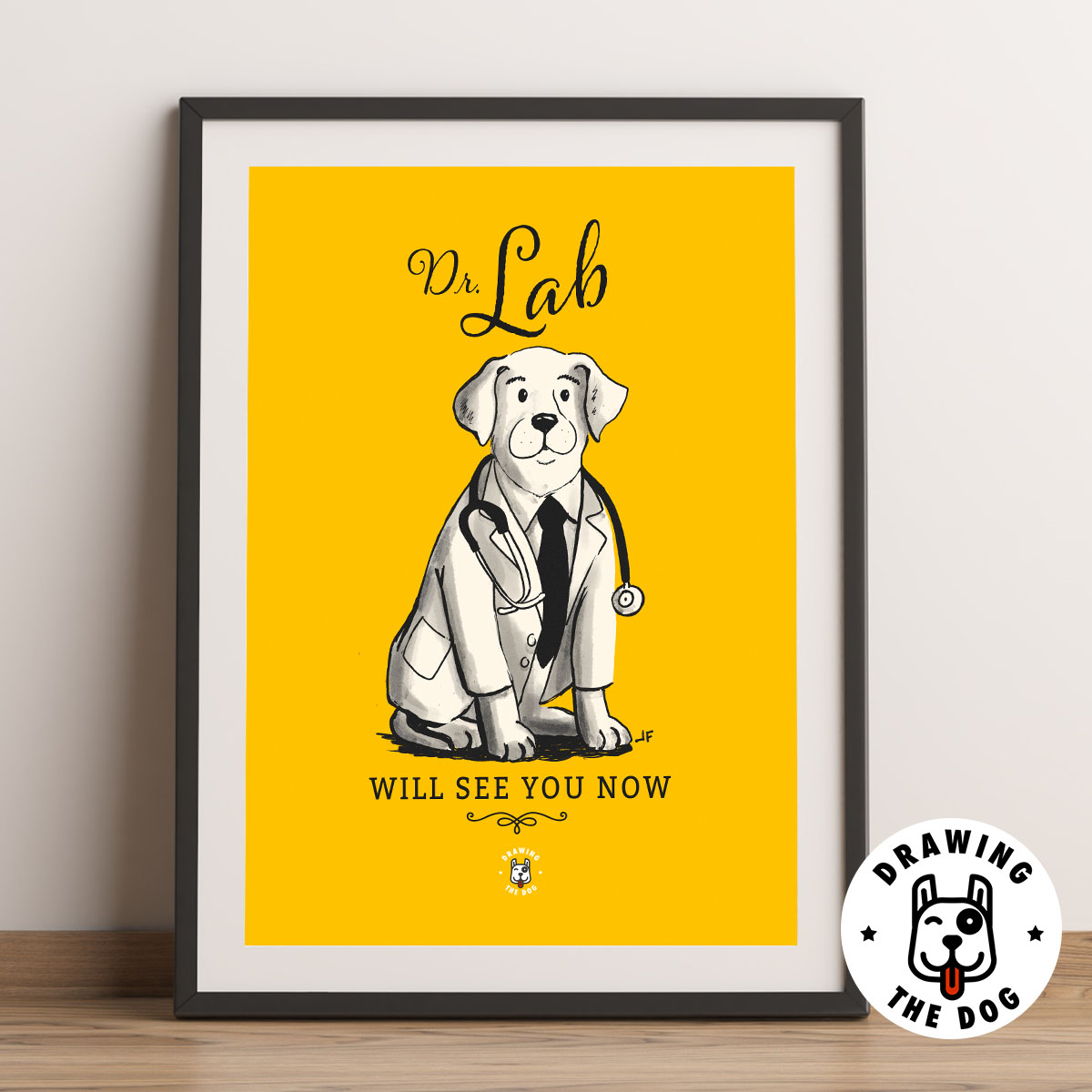
Labradors are famous for their work as therapy dogs, service dogs, and emotional support animals. They have an almost supernatural ability to know when you need comfort – and an equally impressive ability to prescribe cuddles, face licks, and the occasional head-bonk as treatment.
The Dr. Lab print features a distinguished Labrador in full medical regalia with the prescription: “Dr. Lab Will See You Now.” Because we all know that Labs take their job as household therapists very seriously. They may not have gone to medical school, but they have a PhD in making everything better.
Perfect for:
- Owners of actual therapy or service Labs (the real MVPs)
- Anyone whose Lab has impeccable bedside manner
- Veterinary clinic décor or gifts for vet staff
- The person whose Lab somehow always knows when they’ve had a bad day
- Mother’s Day gifts for mums whose Lab is their emotional support animal
This print has a warm, comforting quality that makes it ideal for bedrooms, reading nooks, or anywhere you need a reminder that unconditional love is the best medicine.
Why Hand-Drawn Dog Art Makes the Best Gifts
Every illustration you see here is drawn by hand with genuine love for dogs. There’s no AI, no clip art, no mass-produced nonsense. Just an Irish illustrator (that’s me, Jennifer) who’s studying what makes each breed special and translating that into art.
Each design is sketched by hand and then coloured digitally. I think about the personality of the breed, the stories people tell about their dogs, and what would make someone smile every time they walk past it on their wall.
Choosing the Right Print: A Quick Guide
Not sure which print to choose? Here’s how to decide:
The Labrador Appreciation Society Print is the most versatile, it works for any Lab lover and celebrates the breed as a whole. Choose this if you want something that says “I love Labs” without a specific theme.
The Captain Lab Print is perfect for Labs with a connection to water, beach lovers, or anyone who appreciates nautical décor. It’s got a bit more personality and tells a story.
The Dr. Lab Print is the most heartfelt option, ideal for therapy/service dog owners or anyone whose Lab has helped them through tough times. It’s the emotional choice.
Can’t decide? Get two. They look fantastic together on a wall and create a lovely gallery effect. The vintage aesthetic means they all complement each other beautifully.
Gift-Giving Occasions for Lab Art
These prints work for virtually any occasion:
Birthday Gifts – Perfect for the friend whose birthday wishlist is just “more things with my dog’s face on them”
New Puppy Congratulations – Welcome them to the Labrador Appreciation Society with style
Christmas & Holidays – A thoughtful gift that shows you pay attention to what they love
Just Because – The best reason of all. Lab owners don’t need an excuse to celebrate their dogs.
Sympathy Gifts – A gentle, beautiful way to honour a Lab who’s crossed the rainbow bridge
Housewarming – Help them make their new house feel like home (every home with a Lab in it needs Lab art)
Available Sizes & Framing
All prints are available in multiple sizes to suit any space:
- Perfect for small apartments or gallery walls
- Large enough to make a statement in bigger rooms
- Ready to frame in standard sizes (no custom framing needed!)
Want to see them in action? Check out the framed examples on each product page – they give you a great sense of how these prints look in real homes.
Why Labrador Lovers Deserve Special Gifts
Labs aren’t just dogs, they’re companions, therapy providers, and professional good boys and girls. They come in three glorious flavours: chocolate (for those who like their dogs with a hint of sophistication), black (the classic choice for those who don’t mind a bit of dog hair on everything), and yellow (ranging from cream to fox-red, like my beloved Goldie).
Anyone who shares their life with a Labrador knows they’re not getting a pet; they’re getting a furry tornado of unconditional love who will:
- Greet you like you’ve been gone for years (even if you just took the bins out)
- Find the one muddy puddle in a ten-mile radius and treat it like their personal spa
- “Help” with cooking by enthusiastically pre-cleaning the floor
- Clear your coffee table with one happy wag of that otter tail
That’s why generic “dog lover” gifts just don’t cut it. Lab people need Lab-specific art that captures their dog’s glorious, food-obsessed, water-loving, unconditionally loyal personality. Check out all of our Labrador wall art.
Ready to Find the Perfect Gift?
Whether you’re shopping for a birthday, holiday, or just because you know someone who’s completely obsessed with their Labrador (or you ARE that someone), these hand-drawn prints capture everything that makes Labs special.
They’re conversation starters, smile-makers, and daily reminders that somewhere in the world, there’s a Lab enthusiastically wagging their tail and treating every moment like it’s the best moment ever.
Browse all Labrador prints:
- Labrador Appreciation Society Print
- Captain Lab – Salty Sea Dog Print
- Dr. Lab Will See You Now Print
After all, as every Lab owner knows: you can’t have too much Lab-themed art. It’s scientifically proven.*
(*Ok Not scientifically proven, but it should be.)
Questions about sizing, shipping, or framing? Contact me at jen@drawingthedog.com – I’m always happy to help you find the perfect piece for your space or the perfect gift for the Lab lover in your life.